Spoon Lures: Best Uses, When They Work, and Why
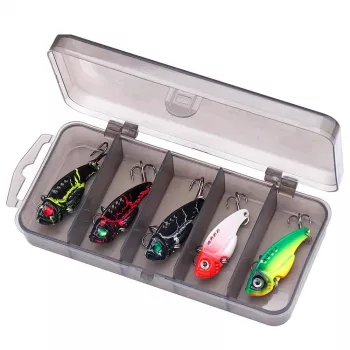
What are spoon lures best for?
Spoon lures are best for covering water quickly and triggering reaction strikes from predatory fish. Their curved, metal shape wobbles and flashes like a fleeing baitfish, making them especially effective when fish are actively feeding or when you need to draw attention in stained water, deep water, or windy conditions.
They shine in situations where a strong visual signal matters: open water, along drop-offs, around submerged points, and over weed edges. Because spoons can be cast far and retrieved at different speeds, they’re a go-to option for anglers who want a simple lure that can be adapted on the fly.
When spoon lures work best
1) When fish are chasing baitfish
Spoons imitate shad, smelt, herring, and other forage with a bright flash and side-to-side wobble. That makes them a strong choice for species that key in on baitfish, such as trout, salmon, pike, muskie, bass, and walleye.
2) For long casts and covering big areas
Most spoons are compact and heavy for their size, so they launch well into wind and reach fish holding far from shore. This helps when probing large flats, reservoirs, or shoreline stretches where fish could be anywhere.
3) In deeper water or on a vertical presentation
Jigging spoons are excellent for getting down to depth fast and staying in the strike zone. They’re commonly used over humps and ledges or through ice, where the flutter on the drop can be just as important as the lift.
4) In low visibility conditions
Flash and vibration make spoons easy for fish to track in murky water, low light, or choppy conditions. Silver and gold finishes are popular starting points, while painted or two-tone options can help add contrast.
For more detail on choosing spoon types, sizes, and retrieves, visit https://elegalle.com/what-are-spoon-lures-best-for/.
FAQ
Do spoon lures work in freshwater and saltwater?
Yes. Spoons catch fish in both, as long as the size, finish, and hardware are matched to the target species and conditions; rinse and dry them after saltwater use to reduce corrosion.












Leave a comment