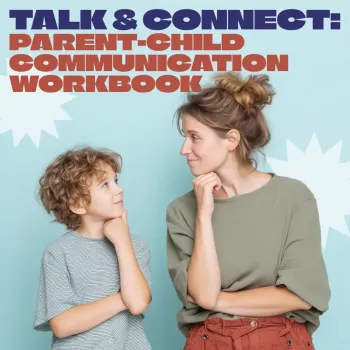
A parent-child communication workbook like Talk & Connect is typically best for elementary-age kids through early teens—roughly ages 6 to 13—because that’s when children can follow simple prompts, name feelings with a bit of guidance, and practice back-and-forth conversation skills without the activities feeling too “babyish.” Many families also find it works well during big transitions (a new school, changes at home, friendship stress) when kids need extra structure to talk things through.
For younger kids (around ages 4 to 6), some sections may still be useful if an adult reads the prompts aloud, keeps sessions short, and focuses on drawing, choosing from options, or acting out scenarios. At this stage, the workbook is less about independent writing and more about building the habit of sharing thoughts and emotions in a calm setting.
For tweens and early teens (around ages 10 to 13), a workbook format can be especially helpful because it gives them a neutral “third thing” to focus on—reducing pressure, making tough topics easier to approach, and creating consistent check-in time with a parent or caregiver. If the child is closer to 13 and prefers privacy, the best results often come from letting them complete certain parts alone, then choosing what to discuss together.
For older teens, results vary. Some teens may respond well to reflective prompts, but others may see a workbook as too structured. In that case, selecting only the most relevant exercises—or shifting to conversation cards or guided journaling—can feel more age-appropriate.
For more detail on picking the right fit for your family, visit the main guide here: https://elegalle.com/what-age-range-is-a-parent-child-communication-workbook-like-talk-connect-best-for/.
Keep sessions short, let the child choose the order of activities, and treat prompts as conversation starters—not a test. Consistency matters more than finishing every page.






Leave a comment