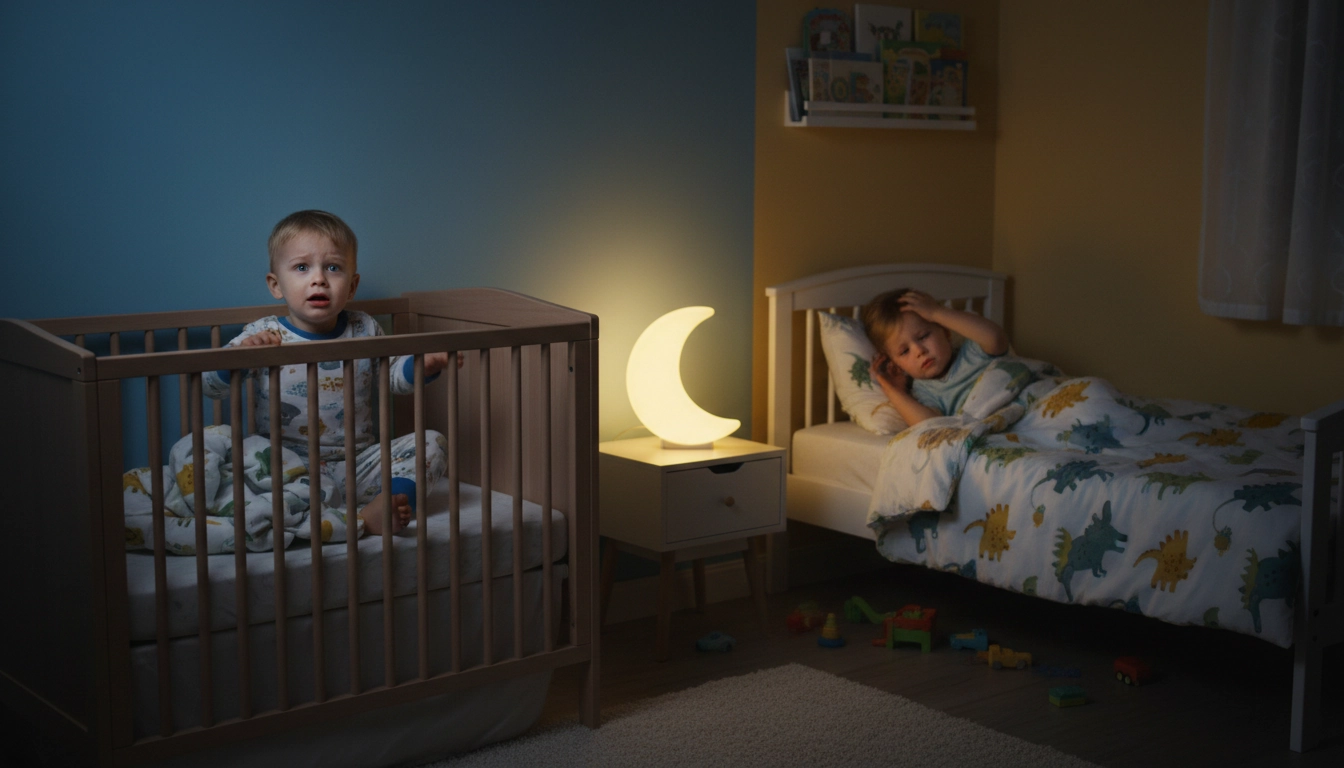
Toddler nightmares and night terrors can look similar in the moment, but they’re very different sleep events. The quickest clue is whether your child can fully wake up, recognize you, and be comforted.
Nightmares usually happen in the second half of the night, during REM sleep. Your toddler may wake up crying, call for you, and seem scared of something specific. They’re typically alert enough to make eye contact, respond to your voice, and accept comfort. Many kids can describe a scary dream in simple terms, and they may have trouble settling back down because they’re worried it will happen again.
Night terrors most often happen in the first few hours after falling asleep, during deep non-REM sleep. A child may suddenly sit up, scream, thrash, sweat, or breathe fast with a wide-eyed “panicked” look. Even though their eyes can be open, they’re usually not truly awake and may not recognize you. Comforting attempts can seem to make it worse, and the episode often ends abruptly with the child lying back down and continuing to sleep.
With nightmares, toddlers sometimes remember being scared or may mention a “bad dream.” With night terrors, most children have little to no memory of the episode.
For nightmares, offer reassurance, a cuddle, and calm words, then help them return to sleep. For night terrors, focus on safety: keep them from getting hurt, avoid shaking or forcibly waking them, and wait for it to pass. If episodes are frequent, prolonged, or include dangerous sleepwalking, talk with your pediatrician.
For a deeper breakdown and more practical tips, visit the full guide on toddler nightmares vs. night terrors.
Consider calling your pediatrician if night terrors happen often, last a long time, involve sleepwalking or injury risk, or if your child snores loudly or seems overly tired during the day. It’s also worth checking in if the episodes start suddenly after a major change, illness, or new medication.






Leave a comment