Homework Routine Toolkit for Parents: Stress-Free Study Habits
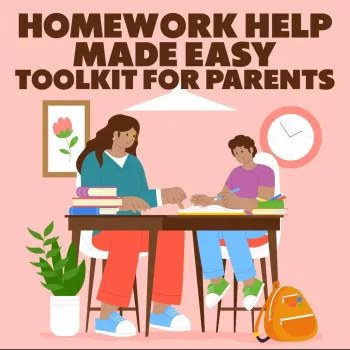
Homework Help Made Easy Toolkit for Parents: Build Strong Study Habits and Independent Learners
Consistent homework routines don’t require nightly battles or complicated systems. A clear plan, a few reusable printables, and simple coaching scripts can help children manage assignments with less stress and more independence. This guide shares practical strategies families can start using right away—how to set up a study space, teach planning skills, and gradually shift responsibility to the student.
What changes when homework becomes a routine (not a negotiation)
When homework is treated like brushing teeth—something that happens at a predictable time in a predictable way—kids spend less energy resisting and more energy starting. Standardizing a few basics also reduces decision fatigue for everyone.
- Standardize the “when/where/what done looks like”: a consistent start time, a consistent spot, and a clear finish line (submitted, checked, packed).
- Make expectations visible: a short checklist works better than repeating reminders that blur into background noise.
- Practice repeatable skills: planning, checking, and asking for help are more powerful than rescuing or re-teaching every step.
- Use calm consistency: the goal is steady progress, not a perfect evening.
Set up a study environment that supports focus
Most “homework problems” start before the first question is answered—missing supplies, distracting devices, or a workspace that makes concentration harder than it needs to be. Aim for a setup that is simple enough to maintain on a regular weekday.
- Choose a predictable spot with a flat surface, good lighting, and minimal distractions.
- Create a small supply station (pencils, paper, charger, calculator, sticky notes) to prevent “I can’t find it” delays.
- Decide on a distraction plan: phone in another room, website blockers if needed, and one clear music rule (or no music).
- Use a timer for work/break cycles (often 15–25 minutes working, 3–5 minutes break) to prevent burnout.
- Agree on a help signal (raised hand, sticky note, or “help card”) so the child can keep working while waiting.
| Element | Simple standard | Why it helps |
|---|---|---|
| Lighting | Bright enough to read without squinting | Reduces fatigue and improves attention |
| Supplies | All essentials in one container | Prevents procrastination by searching |
| Noise | One agreed rule (quiet / soft music) | Avoids repeated arguments |
| Device plan | Only required tabs/apps open | Limits distraction loops |
| Seat & posture | Comfortable, feet supported | Improves stamina for longer tasks |
Teach the planning skill that makes homework easier: “capture, estimate, choose”
Planning is the hidden skill behind “responsibility.” A simple routine teaches kids how to translate a messy list of tasks into a doable plan.
- Capture: write every assignment plus needed materials (including “study for quiz” and unfinished classwork).
- Estimate: make quick time guesses. Estimates won’t be perfect at first, but they teach pacing.
- Choose: pick an order using one simple rule—start with the hardest first, or start with the shortest first if motivation is low.
- Add a finish line: define “complete” (name/date, instructions followed, checked answers, uploaded, backpack packed).
- End with a 60-second preview of tomorrow: what’s due next, what needs signing, what to pack.
For additional guidance on building study habits and homework routines, see the U.S. Department of Education’s resource Helping Your Child With Homework.
Support without hovering: prompts that build independence
Helping works best when it builds the student’s “next time” skills. Instead of jumping in with answers, use short prompts that guide thinking, then step back.
The American Psychological Association summarizes helpful research-backed homework practices here: Homework: Best Practices.
A realistic weekly homework routine that families can stick to
Sample weekday routine (adjust times to fit your child)
| Step | Time | What to do |
|---|---|---|
| Reset | 10 min | Snack, movement break, set up workspace |
| Plan | 5 min | List tasks, estimate time, choose order |
| Work sprint 1 | 20 min | Hardest task first (or quick win if motivation is low) |
| Break | 5 min | Water, stretch, no screens if screens derail focus |
| Work sprint 2 | 20 min | Continue assignments; use help signal if stuck |
| Check & pack | 10 min | Self-check, submit/upload, pack bag, lay out materials for tomorrow |
Printable tools that make the routine easier to follow
When you want a ready-to-use set of these supports, the Homework Help Made Easy Toolkit for Parents – Printable Guide for Creating Study Habits, Homework Strategies & Independent Learning keeps everything consistent from day to day—without reinventing the system each week.
Using the Homework Help Made Easy Toolkit at home
If homework stress is also affecting sleep, mood, or family bandwidth, a broader reset can help. Whole You: Holistic Wellness Guide | Beginner Wellness Ebook | Digital Download on Nutrition, Exercise, Mental Health & Self-Care is a helpful companion for families working on calmer evenings and more sustainable routines.
When you’re unsure what’s typical for your child’s grade, this overview can help frame expectations: How Much Homework Is Too Much?.
FAQ
How can a parent help with homework without doing it for the child?
Coach the process instead of supplying answers: ask what the directions require, what the first step is, and where an example can be found. Use a quick self-check routine (read twice, check instructions, scan for skipped items) and gradually fade support from sitting nearby to brief check-ins.
What if homework turns into arguments every night?
Remove the daily debate by anchoring a consistent start time, using a neutral checklist, and working in short timed sprints with planned breaks. Agree ahead of time what happens when your child is stuck (a help signal and “3 before me”) so frustration doesn’t automatically become a conflict.
How long should homework take each night?
It varies by grade, teacher, and student, so start by confirming expectations and then track actual homework time for one week to spot patterns. If the time is consistently excessive or emotionally draining, bring data to the teacher and adjust the routine (shorter sprints, better planning, or accommodations if needed).













Leave a comment