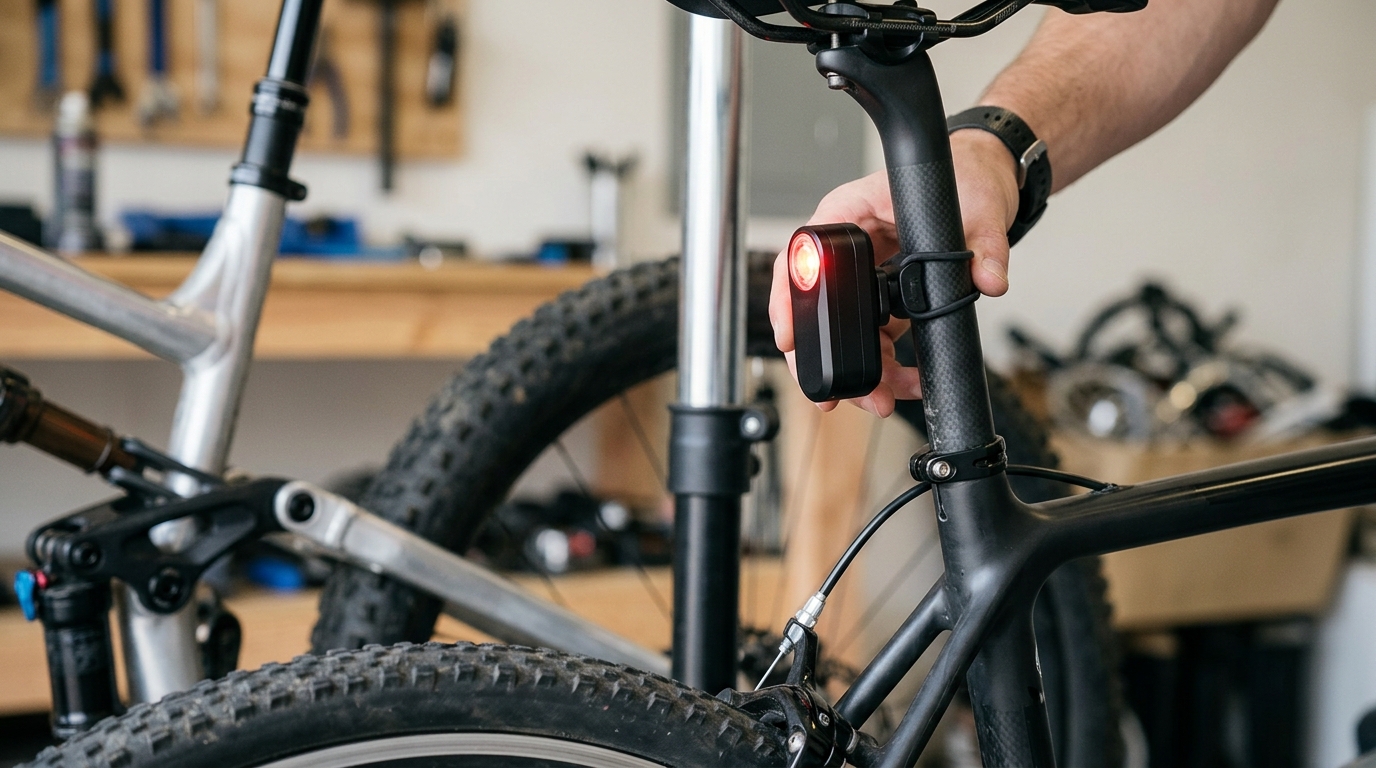
Yes—most smart bike brake-sensing taillights work well on both road bikes and mountain bikes, as long as the light can mount securely and the sensor is set up correctly. Brake-sensing lights typically detect deceleration using an internal accelerometer, so they don’t need to connect to your brake levers or drivetrain. That makes them broadly compatible across bike styles.
Where road and mountain setups differ is vibration, impacts, and mounting locations. On a road bike, a seatpost mount is usually stable and the light has a clear line of sight to traffic. On a mountain bike, rough terrain can trigger extra motion that may cause occasional false “brake” flashes on some models—especially if the light is loosely mounted, angled, or placed on a flexible saddle bag.
First, confirm the mount fits your seatpost shape. Many road bikes use aero or D-shaped posts, while mountain bikes often have round posts and sometimes dropper posts. Look for lights with flexible straps, shims, or multiple mounting options (seatpost, saddle rails, or rear rack).
Second, use any sensitivity calibration the light offers. Some brake-sensing lights let you choose sensitivity levels so the sensor can better handle choppy trails versus smooth pavement. Finally, aim the lens straight back and tighten the mount so the light doesn’t wobble—wobble is the most common cause of inconsistent brake detection.
For model-specific compatibility notes and setup tips, see the full guide here: https://elegalle.com/do-smart-bike-brake-sensing-taillights-work-on-both-road-bikes-and-mountain-bikes/.
For Brake-Sensing Bike Taillights: Road vs MTB Compatibility, the best answer depends on fit, material, care instructions, and how the product will be used day to day.
Check whether your seatpost is round or aero/D-shaped, then confirm the light includes a compatible strap or adapter. If you use a dropper post, choose a mount that won’t interfere with post travel.




Leave a comment