4-in-1 Anxiety Relief Routine: Mindfulness, Reframes & More
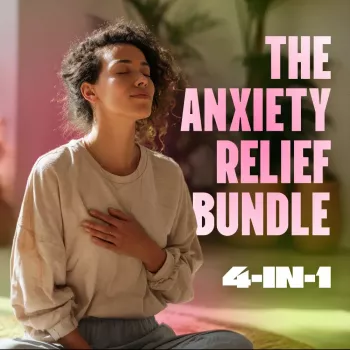
The Anxiety Relief Bundle: A Path to Calm — A Practical 4-in-1 Routine for Stressful Days
Anxiety often shows up as racing thoughts, tension in the body, and a constant feeling of being “on.” Building calm usually works best with a repeatable system: quick tools for the moment, mindset practices for the day, and simple prompts to stay consistent. The Anxiety Relief Bundle: A Path to Calm brings those pieces together—mindfulness exercises, positive thinking prompts, a printable checklist, and a course-style outline—so a calmer routine feels doable even on busy days.
What’s included in the 4-in-1 bundle
This bundle is designed to reduce the “What do I do now?” moment that often makes anxiety feel worse. Each piece supports a different part of the anxiety cycle—body sensations, thought spirals, and follow-through.
- Mindfulness exercises designed for short, repeatable practice (useful for grounding during anxious spikes).
- Positive thinking prompts and reframes that encourage more balanced self-talk without forcing “toxic positivity.”
- Printable checklist to reduce decision fatigue and track small daily wins.
- Course outline format that organizes the tools into a step-by-step path, making it easier to follow a plan instead of guessing what to do next.
Bundle components and how they help
| Component | Best for | Typical time | Example outcome |
|---|---|---|---|
| Mindfulness exercises | Calming the nervous system in the moment | 3–10 minutes | Lowered physical tension and steadier breathing |
| Positive thinking practice | Reducing spirals and catastrophizing | 5–10 minutes | More realistic, less threatening interpretations |
| Printable checklist | Consistency and habit-building | 1–2 minutes | Clear next step when motivation is low |
| Course outline | Structure over time | 10–20 minutes per lesson block | A repeatable routine that feels progressive |
Who this routine fits best
- Busy schedules: short practices that can be done between tasks or before sleep.
- Overthinkers: tools that shift attention from mental loops to present-moment cues.
- People who start strong but lose consistency: checklist + outline to reduce friction.
- Anyone who prefers guidance: a mapped sequence can feel safer than improvising.
For a broader, whole-life approach—movement, nutrition basics, self-care rhythms, and mental health foundations—pair the routine with Whole You: Holistic Wellness Guide to support calmer days from multiple angles.
A simple 7-day path to calmer days (using the bundle)
Starting small matters. Anxiety often pushes “all-or-nothing” energy—either do everything perfectly or skip it. This 7-day path is intentionally light so the routine can stick.
- Day 1: Choose one mindfulness exercise and practice once; keep it intentionally short.
- Day 2: Add a second session (morning or evening) to create a predictable anchor.
- Day 3: Introduce one positive thinking prompt; write a balanced reframe in 2–4 sentences.
- Day 4: Use the printable checklist to track one calming action and one basic need (sleep, hydration, movement).
- Day 5: Combine: mindfulness first, then a positive reframe immediately after—calm body, then calm thoughts.
- Day 6: Review the course outline and pick the next lesson block that matches the current challenge (worry, panic sensations, social stress).
- Day 7: Do a quick weekly reflection: what reduced symptoms fastest, what felt hardest, and what to repeat next week.
How to use mindfulness exercises when anxiety spikes
When anxiety rises quickly, the body often feels it first—tight chest, shallow breathing, clenched jaw, restless hands. Mindfulness works best here when it’s practical, sensory, and brief.
- Start with the body: notice jaw, shoulders, stomach, and hands; soften one area at a time.
- Use breath as a cue, not a performance: aim for gentle slowing rather than “perfect” breathing.
- Try a 5-4-3-2-1 grounding scan: name 5 things you see, 4 you feel, 3 you hear, 2 you smell, 1 you taste to interrupt racing thoughts.
- Keep sessions short during high anxiety: success is returning to the present, not clearing the mind completely.
For more on anxiety symptoms and how common they are, see the National Institute of Mental Health (NIMH) overview of anxiety disorders. For what research suggests about mindfulness approaches, the NCCIH summary on meditation and mindfulness is a helpful, safety-focused reference.
Positive thinking that stays realistic
Balanced thinking isn’t about pretending everything is fine. It’s about reducing mental threat inflation so the nervous system gets a clearer message: “This is hard, and I can handle the next step.”
- Replace absolutes (“always,” “never”) with specifics (“sometimes,” “right now,” “in this situation”).
- Name the fear, then add a probability check: “What’s the most likely outcome?”
- Use a compassionate voice: talk to yourself as if supporting a friend under pressure.
- Track evidence: list one thing handled well today, even if it was small.
If anxiety is fueled by ongoing stress, learning about how anxiety works can reduce shame and self-blame. The American Psychological Association (APA) anxiety resource offers a clear overview.
Printable checklist ideas to keep momentum on low-energy days
If you want everything in one place, The Anxiety Relief Bundle: A Path to Calm is built to be reused—especially on the days when motivation is low and structure matters most.
When to add extra support
FAQ
Is this bundle better for quick relief or long-term progress?
It’s designed for both: quick grounding tools for anxious spikes and a structured checklist + outline that supports steady practice over weeks, which is where long-term change tends to build.
How much time is needed each day to get value from the exercises?
Plan for about 5–15 minutes per day. On extremely busy days, the checklist can help you do a “minimum calm” routine in just a couple of minutes and still stay consistent.
Can mindfulness and positive thinking help if anxiety feels physical (tight chest, nausea, shaking)?
Yes—body-first mindfulness can reduce arousal and help sensations settle, and gentle reframes can reduce the fear that amplifies symptoms. If physical anxiety is intense, frequent, or persistent, professional guidance is a good next step.












Leave a comment