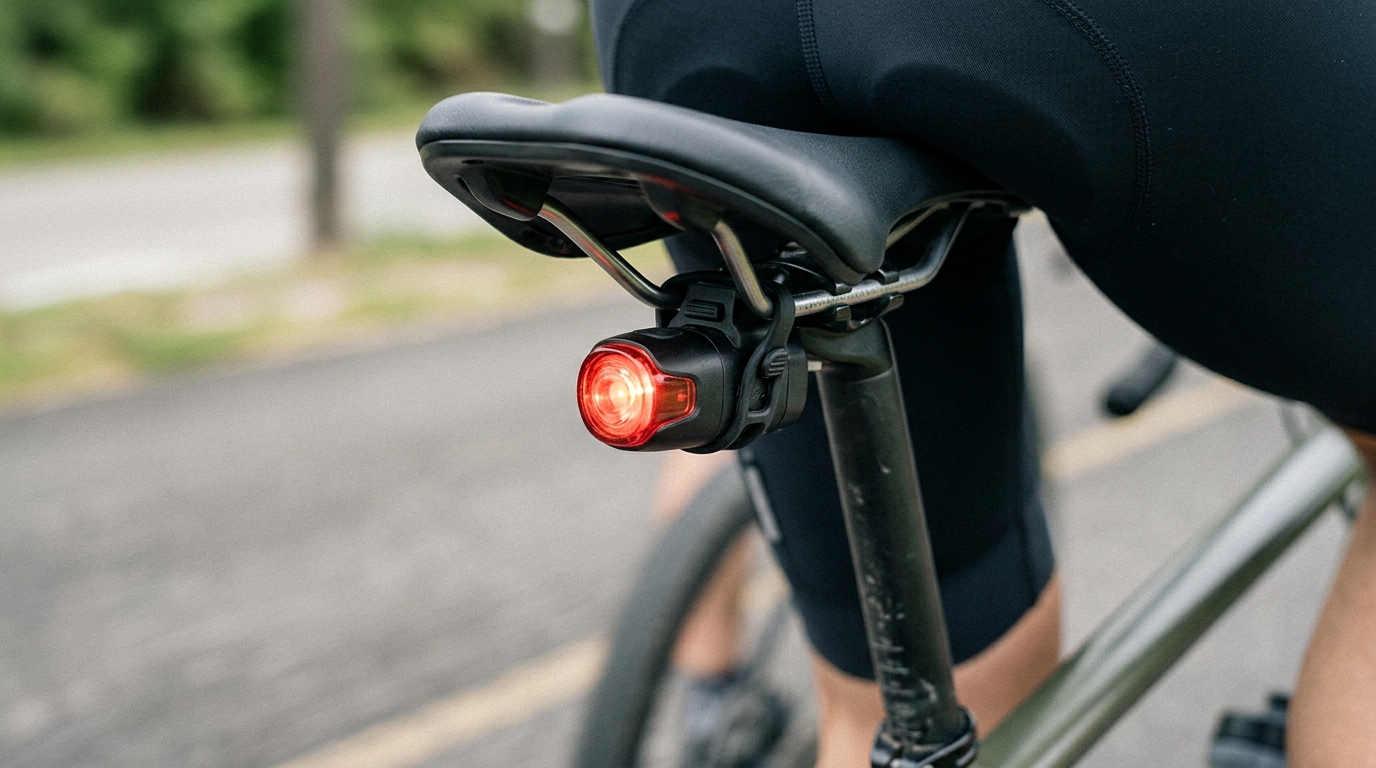
Most “brake-sensing” bike taillights figure out that you’re slowing down by using tiny motion sensors inside the light—usually an accelerometer (and sometimes a gyroscope) similar to what’s in a smartphone. These sensors constantly measure changes in movement. When you decelerate, the light detects a drop in forward speed (negative acceleration) and triggers a brighter “brake” mode so drivers and riders behind you get a clear signal.
An accelerometer measures acceleration along one or more axes. When your bike is moving steadily, the readings stay fairly consistent. When you slow down, the pattern shifts quickly—often as a short, noticeable deceleration spike.
The taillight’s processor compares sensor data to built-in thresholds. If the deceleration crosses that threshold for a certain fraction of a second, it interprets that as braking or slowing and switches to a higher-intensity flash or solid bright mode.
Good designs filter out small bumps, vibrations, and minor speed changes. That can include smoothing noisy sensor readings, requiring the deceleration to last long enough to be “real,” and ignoring brief jolts from rough pavement.
Mounting angle and stability matter: a loose seatpost strap or a tilted mount can confuse the sensor. Terrain also plays a role—cobblestones and potholes create extra motion that lower-end lights may misread. Battery level and temperature can influence performance too, since some lights reduce maximum brightness to conserve power or manage heat.
For a deeper breakdown of sensing methods, common limitations, and practical setup tips, visit this complete guide on brake-sensor bike taillights.
Yes, many will still trigger if the bike actually decelerates noticeably (for example, from wind resistance, an incline, or coasting to a stop). If speed drops gradually, some lights may not activate the brake mode because the deceleration threshold isn’t met.




Leave a comment